
Most advice on clearing a lot for a house is written by people who have never sat in the machine. This is the version from the seat: how much to open up, which trees to save and which ones will crack your slab, the order the work has to happen in, and the real prices from our documented homesite jobs.
Most Texas homesites on one to four acres clear in a single machine day. Our published one day homesite and selective clearing jobs ran $4,000 to $7,000 total, depending on how thick the growth was and whether the pad was grubbed. Larger tracts where the whole property is opened up ran $12,000 to $18,000 for 8 to 18 acres. Every one of those numbers is linked to the project page below.
The reason a homesite is usually a one day job is that you rarely clear the whole property. You clear the house pad and a working margin around it, the driveway route, the septic field, and whatever view or yard you want, and you leave the rest standing. Three acres of dense cedar might take a dedicated mulcher a full day to flatten, but three acres where the house takes up half an acre and the rest stays wooded is a morning.
Pricing is by the machine day, published and the same for everyone: $3,000 per day for a skid steer mulcher with transport included, or $4,000 per day plus transport for the high horsepower dedicated mulcher on heavy growth and anything over 8 inches in diameter. A grubbed pad or a dozer day for the driveway adds to that. The cost to clear land page breaks all of it down by tract size across 38 documented jobs.
The single most expensive mistake on a homesite is clearing too much. Once a 40 year old live oak is gone it is gone, and the shade it would have thrown on your west wall in August is gone with it. The second most expensive mistake is clearing too little and leaving a tree standing where its roots will run under the slab. Here is how we walk a lot before the machine comes off the trailer.
The house footprint gets cleared completely, plus a working margin of 15 to 20 feet on every side for the forms, the concrete trucks, the framing crew and the scaffolding. Anything inside that margin comes out, roots included, because the pad will be cut, filled and compacted and a stump under fill is a soft spot waiting to settle. This is the one part of the lot that gets grubbed rather than mulched, and the mulch from the rest of the clearing gets scraped off the pad footprint so the dirt contractor is building on clean soil.
Mature hardwoods outside the pad margin, especially live oak, post oak, pecan and cedar elm, are worth more standing than any amount of clearing will ever save you. We flag keepers with the owner before starting, mulch the brush and cedar out from under them, and stay off the root zone with the machine. Post oaks in particular do not tolerate grade changes or compaction over their roots, so on Cross Timbers and Hill Country lots the drip line of a post oak is a line the dozer does not cross.
Anything dead, anything leaning at the house, cedar and yaupon that will keep the lot dark and choke the oaks, hackberry and mesquite that will drop limbs on the roof, and any tree whose trunk sits within about 20 feet of the slab edge. Roots chase water, and a foundation is the wettest thing on a dry Texas lot in summer.
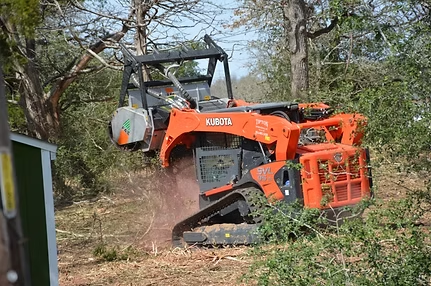

A homesite is a sequence, and doing it out of order costs money every time. This is the order that works.
1. Survey and stakes. Property pins located, house corners staked, septic field and driveway route flagged. If you do not know where the pad goes yet, we can clear a view corridor and the drive and come back for the pad, but clearing without a plan is how people end up with a house in the wrong spot.
2. Call 811. Before anything gets grubbed. Buried gas, fiber and water lines run through more rural lots than people expect, and a mulcher working at the surface is fine but a root rake is not.
3. Clear. Mulch the brush and unwanted trees, grub the pad footprint, flag and protect the keepers. Usually one day on a typical lot.
4. Pad and driveway. Dozer work: cut and fill the pad to grade, shape the driveway route, and build the construction entrance so concrete trucks can get in after a rain. On Hill Country rock we can mill the limestone on your own lot into road base. The gravel driveway guide covers that build in detail.
5. Septic, utilities, foundation. Your septic installer, the utility contractors and the foundation crew take it from here. We do not install septic systems, trench utilities or pour foundations, and we will say so up front rather than pretend otherwise. What we hand over is a cleared, graded, accessible site that those trades can start on the day they arrive.
Our Evant project is the whole sequence on one job: 18 acres selectively cleared and the homesite graded, four machine days, $12,000 to $15,000 published.
Every row is a documented project on this site with its own write up. These are the jobs to compare your quote against.
| Project | Acres | Days | Published cost | What was done |
|---|---|---|---|---|
| Austin house pad | 0.75 | 1 | $5,000 to $6,000 | House pad cleared and tree pile mulched, residential lot |
| Horseshoe Bay homesite | 1 | 1 | $6,000 to $7,000 | Full homesite clearing, Hill Country lot |
| Cleburne homesite | 3 | 1 | $4,000 to $5,000 | Selective clearing, shade trees kept |
| Lexington homesite | 3 | 1 | See project | Homesite clearing and cedar removal |
| Elgin selective clearing | 4 | 1 | $4,000 to $5,000 | Selective clearing and yaupon removal |
| San Marcos homesite prep | 8 | 4 | $15,000 to $18,000 | Homesite prep and selective clearing |
| Georgetown selective clearing | 12 | 3 | $12,000 to $15,000 | Selective land clearing |
| Evant homesite and grading | 18 | 4 | $12,000 to $15,000 | Selective clearing and homesite grading |
Notice that the one acre Horseshoe Bay lot cost more than the three acre Cleburne lot. Density and rock decide the price, not acreage. A small lot of solid cedar on limestone is more machine time than three acres of open post oak savannah with brush underneath. That is why we quote from photos rather than from a number of acres.
Hill Country limestone and cedar. Thin soil over rock, dense Ashe juniper, live oak motts worth saving. Cedar mulches fast and the lot opens up dramatically. The pad often needs rock cut rather than dirt cut, and the rock you cut can be milled into your driveway base. See Hill Country land clearing and cedar removal.
Blackland clay. Central and North Texas from Austin up through Dallas. Expansive soil that swells wet and shrinks dry, which is why slabs here are engineered and why the pad gets built to a moisture spec. Clear when it is dry, keep the mulch layer on everything that is not the pad so the ground stays stable, and expect the engineer to want the pad footprint grubbed clean. The DFW land clearing hub goes deep on this ground.
Post oak sand. The Cross Timbers west of Fort Worth and the sandy belt east of Austin through Bastrop and Elgin. Beautiful mature post oaks, thick yaupon underneath. Selective mulching is the whole game: open the understory, keep the canopy, stay off the roots.
East Texas pine and hardwood bottoms. Real timber, wet ground, fast regrowth. Larger trees mean the high horsepower mulcher, and bottomland clears at the dry end of the year.
Tree ordinances. Inside the city limits of Austin, San Antonio, Dallas, Fort Worth and most of their larger suburbs, hardwoods over a set trunk diameter are protected and removing them needs a permit or a mitigation plan. Brush, cedar, mesquite and dead wood are almost never protected. On unincorporated county land there is usually no tree permit at all. We will tell you which trees on your lot are likely covered before we quote, but we do not pull permits on your behalf.
HOA and deed restrictions. Acreage subdivisions often have an architectural committee with its own tree and clearing rules that are stricter than the county. Read the restrictions before flagging trees.
Floodplain. Mulching brush at grade in a mapped floodplain is generally fine. Grading, filling or building a pad in one needs a floodplain development permit from the county or city, and the house itself will need to be elevated. Check the FEMA map before you fall in love with the creek view.
Septic. Rural homesites are on septic, permitted through the county under state rules, and the drain field needs a set distance from the house, the well and the property line. Clear the field area at the same time as the pad so the installer is not working around brush.
Burn bans. Most of Texas is under a burn ban for a good part of the year, and many counties will not let you burn a brush pile at all near a subdivision. Mulching sidesteps the whole problem: nothing leaves the property and nothing gets lit.
The survey pins. Find them before we arrive. A cleared strip on the neighbor’s side of the line is the fastest way to start a homesite with a lawsuit.
1. Clearing the whole lot. It costs more, it kills the shade, and it turns a wooded homesite into a bare field that takes 30 years to grow back. Clear what the house and the yard need.
2. Leaving stumps under the pad. Mulching flattens brush but leaves the root ball. That is fine everywhere except under the slab and the driveway, where it has to be grubbed or it settles.
3. Forgetting the driveway. A loaded concrete truck can weigh 30 tons. If the drive is not built before the foundation pour, the first truck after a rain sinks to the axle in your front yard.
4. No drainage plan. Water has to go somewhere once the brush that was soaking it up is gone. The pad gets shaped to shed water and the driveway gets a crown and ditches, or the house gets a wet crawlspace.
5. Grading over tree roots. Six inches of fill over a post oak’s root zone kills it in two years. You will not see it coming. Keep the grade change outside the drip line of anything you want to keep.
6. Hiring on price per acre. Nobody can honestly price a homesite by the acre without seeing it. A crew that quotes a per acre number sight unseen either padded it or will find a reason to change it on the day. Send photos, get a real number.
For the difference between a clearing pass that opens a lot and one that reclaims a pasture, see brush clearing vs underbrush clearing, and the machines that do each job are on the equipment guide.
Our published one day homesite jobs ran $4,000 to $7,000 total for lots of one to four acres. Larger tracts where the whole property was opened ran $12,000 to $18,000 for 8 to 18 acres. Day rates are $3,000 for a skid steer mulcher with transport included, or $4,000 plus transport for the high horsepower machine.
The house footprint plus a 15 to 20 foot working margin, the driveway route, the septic field, and whatever yard and view you want. Leave the rest wooded. Clearing the whole lot costs more and gives up the shade.
Under the pad and the driveway, yes. Stumps and roots under fill settle and crack slabs. Everywhere else, mulching and leaving the root mat in place is better for the soil and cheaper.
Keep trunks about 20 feet or more from the slab edge, further for large species with aggressive roots. Roots chase the moisture under a foundation and lift or crack it over time.
Usually not on unincorporated county land. Inside most city limits, protected hardwoods over a set diameter need a tree removal permit or mitigation. Grading in a mapped floodplain needs a floodplain development permit. HOA restrictions apply on top of all of it.
Most one to four acre homesites are a single machine day for the clearing, plus a dozer day if the pad and driveway are being built at the same time. Dense cedar on rock takes longer than open post oak with brush underneath.
Ideally after the house is staked, so the pad and the keeper trees are decided together. If you need a view or a driveway first, those can be cleared early and the pad cleared once the plans are set.
It is the best tool for a homesite. It clears between the trees you keep without damaging them, leaves no brush piles or haul off, and the mulch layer controls erosion until construction starts. The pad footprint still gets grubbed and scraped clean.
Yes. We clear, grub the pad, cut and fill to grade with the dozer, and build the gravel driveway and construction entrance. We do not install septic systems, trench utilities or pour foundations.
A few photos and a rough idea of where the house goes is enough for a real number, usually the same day. Clearing, pad and driveway from one crew.