
A brush hog and a forestry mulcher both “clear brush,” and that is where the similarity ends. We run both, so here is the honest line between them: what each machine can cut, what the ground looks like after, what each costs at our published rates, and how to tell from a photo which one your place needs.
A brush hog is a rotary shredder on a tractor. It mows grass, weeds and light regrowth on ground that is already open, cheaply and fast, and it leaves ragged stems that it had to drive over first. A forestry mulcher is a purpose built grinding head on a tracked machine. It takes standing trees and closed thickets down to fine mulch at ground level, works between trees you keep, and does not need open ground to start. If you can drive a tractor across it today, brush hog it. If you cannot, or the stems are woodier than your thumb, it is mulcher work, and putting a brush hog into it breaks the shredder and leaves the brush. Our tractor runs $1,500 per day plus transport in Central Texas; the skid steer mulcher is $3,000 per day with transport included and the high horsepower mulcher $4,000 per day plus transport.
Most of the confusion comes from the word brush. To a tractor, brush is broomweed, sunflowers, last year’s mesquite seedlings and a few sprouts of yaupon. To a mulcher, brush is a cedar brake you cannot walk through. Both are honest uses of the word, and the machine that handles one is useless on the other.
| Brush hogging | Forestry mulching | |
|---|---|---|
| The machine | Rotary cutter on a tractor, blades spinning flat under a deck | Drum or disc mulching head on a tracked skid steer or a dedicated forestry machine |
| What it cuts | Grass, weeds, seedlings and light regrowth; heavy duty cutters handle small saplings | Standing trees, cedar, mesquite, yaupon, closed thickets, stems well past what a tractor can drive over |
| Where it can start | Ground the tractor can already drive across | Anywhere the machine can push into; it makes its own opening |
| What is left | Chopped tops lying on stubble; stems cut a few inches up; stumps untouched | Fine mulch layer; stems ground to an inch or two of grade; trunks gone |
| Rocks and stumps | Bend blades and break gearboxes | The head rides over rock; stumps get ground |
| Trees you keep | Mows around them where it fits | Works right up to the trunk without wounding it |
| Regrowth | Everything resprouts; it is a mowing, not a removal | Cedar is finished; mesquite and yaupon resprout from the crown and need a follow up pass |
| Published rate | $1,500 per day plus transport, Central Texas | $3,000 per day skid steer with transport; $4,000 per day plus transport high horsepower |
| Right for | Pasture maintenance, hay ground, keeping cleared land clear, weeds before they seed | Reclaiming overgrown land, cedar and mesquite, homesites, lanes, views, fence lines |
A brush hog is the cheapest machine you can put on Texas ground, and on the ground it suits it is not close. Open pasture that has gone to weeds. A hay meadow between cuttings. Ground we mulched two years ago where the mesquite and yaupon are sending up sprouts and you want them knocked back before they go woody. Roadsides, fence rows that are grass rather than thicket, a food plot after the season. Anything a tractor can drive across without the operator wincing.
The rule we use: if the stems are thinner than your thumb and you can see the ground between them, shred it. The tractor covers acres in an afternoon, the cost is a fraction of a mulcher day, and the ground looks mowed. That is maintenance, and it is how cleared land stays cleared. Our pasture reclamation page covers the follow up schedule that keeps a reclaimed pasture from going back to brush, and shredding is most of it.
In Central Texas we run a tractor alongside the mulchers, so shredding, discing and seeding can follow a clearing job in the same visit. Outside Central Texas a local tractor service is usually the right call for a mowing job, and we will say so rather than send a mulcher to do a tractor’s work.

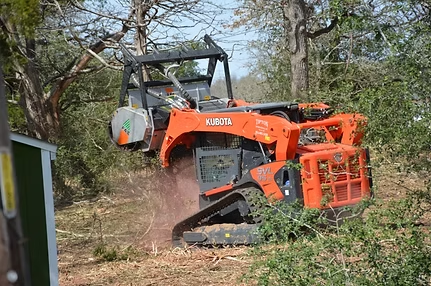
The moment the brush closes up, the tractor is out. A closed cedar brake, a yaupon thicket under the oaks, a fence line that became a hedge, mesquite with trunks instead of stems, a lot that has not been touched in a decade. A brush hog cannot get into any of that, and the ones that try come home with bent blades and a broken gearbox. A forestry mulcher pushes into standing growth, grinds the whole tree from the top down, and leaves a mulch layer where the thicket was. It works around the trees you keep without touching them, which a mower deck cannot do in tight quarters, and it grinds the stem to the ground so there is no stubble to catch a tire or a hoof.
Two more differences matter. Rock: Hill Country limestone eats mower blades, and a mulcher head rides over it. Stumps: a brush hog leaves every one, and the next tractor to cross the pasture finds them. The mulcher grinds them to an inch or two of grade and mulch covers the rest.
The documented jobs show the range. Our Dale pasture, nine acres of grown up ground back to grazing in two days at $8,000 to $9,000. The Elgin selective job, six acres of yaupon out from under the oaks in two days at $9,500 to $10,500. And the 125 acre Elgin reclamation, 37 machine days; with a tractor and a brush hog and weekends that tract is a multi year project that never finishes, because the first half grows back before the second half is done. The forestry mulching page covers the machines, and the brush clearing page covers the service.
Can you see the ground between the stems? Yes: tractor. No: mulcher.
Are the stems thinner than your thumb? Yes: tractor. Thicker, or any trunk you would call a tree: mulcher.
Could you drive a pickup across it? Yes: tractor, and it is maintenance. No: mulcher, and it is clearing.
Is there rock at the surface? Tractor blades and limestone do not get along. Mulcher, or mow only the soil ground.
Do you want the stumps gone? A brush hog leaves every one. A mulcher grinds them to grade. If the ground is going to be built on, neither is the answer; that is grubbing, covered in the mulcher vs bulldozer guide.
Is it mesquite? Both machines are a haircut on mesquite. If you want it gone, the mesquite guide covers grubbing.
Most properties are both. The open pasture gets shredded, the thicket along the creek gets mulched, and the two machines are on site the same week. Send photos and we will draw the line for you.
Brush hogging is cheap because the machine is cheap to run and it moves fast on open ground: $1,500 per day plus transport for our tractor in Central Texas; elsewhere a local tractor service prices it by the hour or the acre. Forestry mulching costs more per day because it is doing a different job: $3,000 per day for the skid steer mulcher with transport included, $4,000 per day plus transport for the high horsepower machine, and the day count is set by how much wood is standing. Where people go wrong is comparing the two on the same ground. On open pasture the tractor wins by a mile. On a thicket the tractor cannot do it at any price, so the mulcher is not the expensive option, it is the only one. The cost to clear land guide has the per acre arithmetic across all the documented jobs, and the brush vs underbrush guide covers the selective end of mulcher work.
A brush hog is a rotary mower on a tractor that shreds grass, weeds and light regrowth on open ground and leaves stems and stubble. A forestry mulcher is a grinding head on a tracked machine that takes standing trees and closed thickets down to fine mulch at ground level and can start anywhere.
Not thick brush. Heavy duty cutters handle small saplings on open ground, but a closed thicket or woody stems bend the blades and break the gearbox. That is mulcher work.
They are for different ground. Brush hogging is better and far cheaper for maintaining open pasture. Forestry mulching is the only option for overgrown land, cedar, mesquite and thickets a tractor cannot enter.
Our tractor is $1,500 per day plus transport in Central Texas. The skid steer mulcher is $3,000 per day with transport included and the high horsepower mulcher $4,000 per day plus transport. On open ground the tractor is the cheaper answer; on a thicket the tractor cannot do the job at all.
Yes, in Central Texas, where we run a tractor alongside the mulchers for shredding, discing and seeding. Outside Central Texas a local tractor service is usually the right call for a mowing job.
Yes. Brush hogging is a mowing; every plant it cuts resprouts. Mulching finishes cedar for good, but mesquite and yaupon resprout after either machine and need a follow up pass or grubbing.
No. It mows around and over them and leaves every one. A forestry mulcher grinds stumps to an inch or two of grade. Removing roots for a building site is grubbing, a dozer or excavator job.
Send photos and the acreage. We will tell you tractor, mulcher, or both, and what it costs. If it is a mowing job and we are not the right call, we will say that too.