We cleared 1,400 acres for Cattleman Solar in 242 days and 800 acres for a commercial solar farm in 154 days, both full clears to fine mulch specs, on schedule and on budget. If your project runs on interconnection dates and financed milestones, you need a clearing contractor with receipts, not promises. Ours are below.
Call 512-400-2693Full clears across the array footprint with the mulch finish your racking, trenching, and road contractors need behind us. The spec is verified section by section, not assumed, because everything built after us sits on the surface we leave.
Linear clearing to interconnects and along easements, kept maintainable and cut clean at the edges. Our 127 acre LCRA corridor finished inside a 37 day public utility window.
The road network that carries your construction traffic and the staging ground it needs, cleared and, where required, grubbed and graded ready for rock.
Anywhere concrete or compaction is going, roots come out entirely. We grub and grade inverter pads, substation footprints, and O&M building sites to the geotech spec.
Most of what is written about solar farm land clearing is written by people who have never delivered one. Here is the process as we ran it on 800 acres in Brownwood, because the sequence matters more than the machinery.
A solar developer does not just need vegetation gone. They need a surface the racking contractor can drive piles through, the trenching crews can cut without dragging debris, and the road builders can compact against. That gets written down as a clearing specification: what comes off, what the finish looks like, how fine the mulch runs, and which zones need roots removed entirely. On the Brownwood project the spec called for a very fine mulch finish across the full 800 acres, and every planning decision flowed from that line.
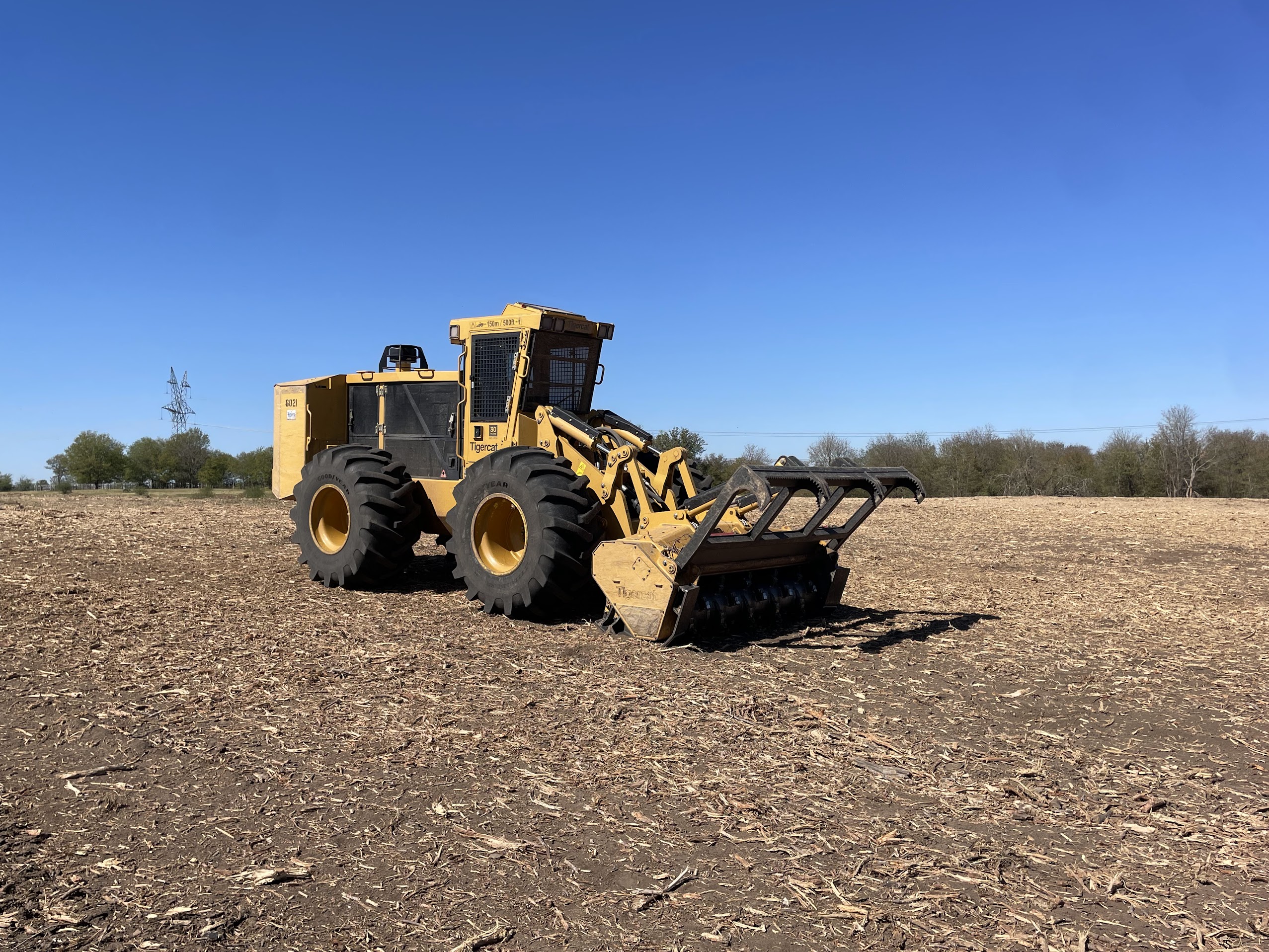
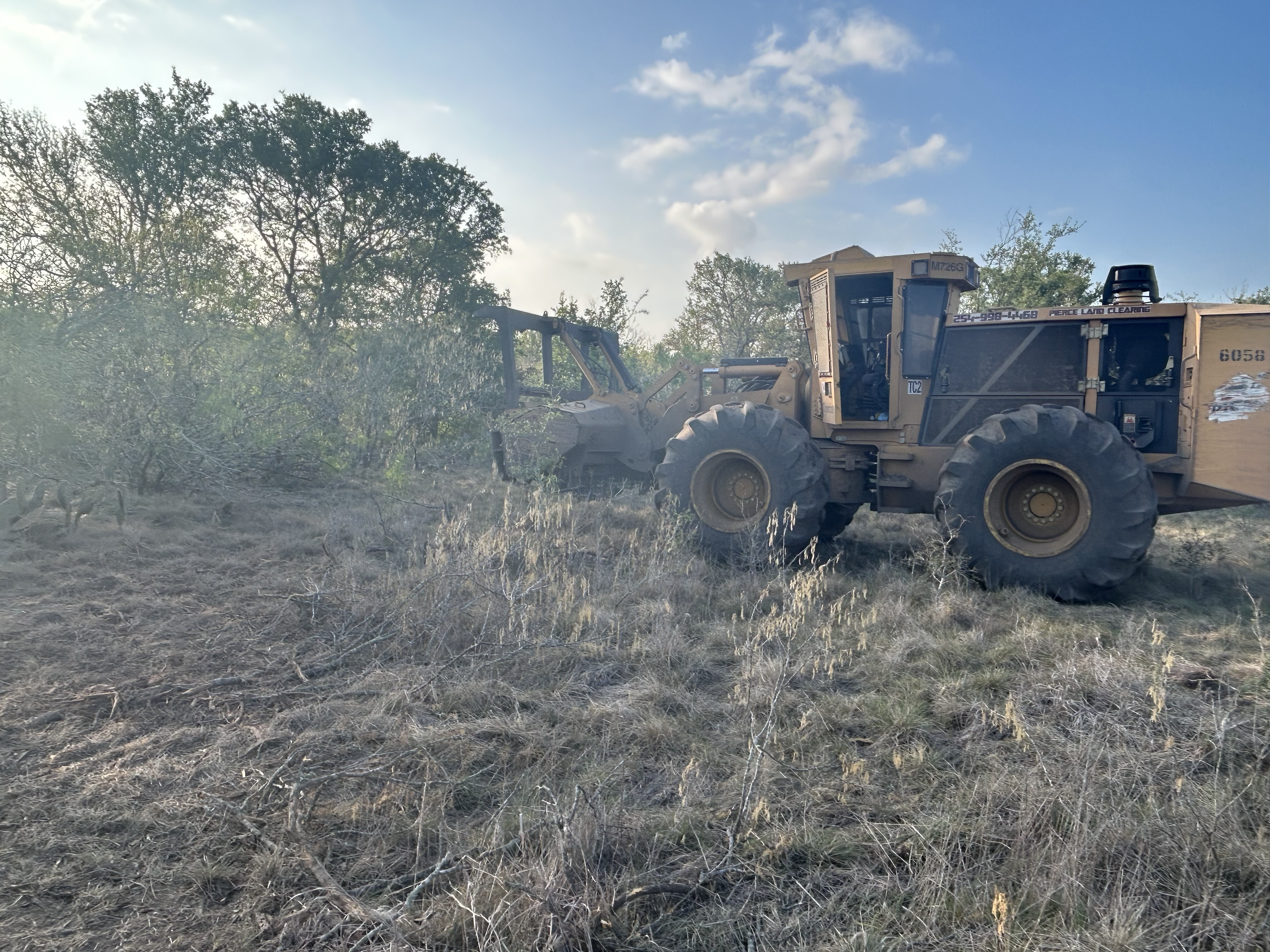
Nobody clears 800 acres as one field. The site gets divided into sections, each cleared, refined to spec, and verified before the machines roll forward. Two Tigercat M726G mulchers ran the Brownwood site in coordinated passes, one opening ground and one refining behind it. Working in verified sections means the developer can release finished ground to the following trades while clearing continues ahead of them, which is how a 154 day clearing schedule coexists with a construction schedule instead of blocking it.
Mesquite flats, cedar brakes, and oak mottes clear at different speeds, and West and Central Texas solar country usually serves a mix of all three. Our production planning runs on real rates, four to six acres a day per machine in light growth, three to four in moderate, slower in heavy cedar, and the schedule we commit to is built from those numbers against your actual vegetation, not from optimism. That is why Brownwood finished on time: the math was honest on day one.
Hundreds of open acres shed a lot of water in a Texas storm, and a stripped site erodes while the project waits on the next phase. Mulching in place leaves a ground cover layer that holds the surface through the construction gap, protects the stormwater permit, and saves the developer from re-stabilizing ground they already paid to clear. It also means no burn piles on an energy site and no debris convoys crossing a lease.
Inverter pads, substation footprints, O&M buildings, and the road network need root systems out and soil compacted to the geotech spec. The rest of the array area usually does not, and paying to grub ground that only needs a clean mulched surface is money a developer never gets back. We work off the site plan so the heavy treatment lands only where the drawings demand it.
Our crews run statewide across all six of our Texas service regions, from the Hill Country and Central Texas solar corridors out to West Texas sites and the utility work between them. Mobilization at fleet scale is part of the quote, and multi month deployments like Brownwood are the job, not an exception. Between the 1,400 acre Cattleman Solar clear, the 800 acre Brownwood solar clear, the LCRA corridor, and our right of way crews, the capability is documented end to end.
Full write ups, real machines, real timelines. This is the documentation we hand every developer who asks whether we can hold a schedule.
Preston, Dustin, and Steven just wrapped up an amazing job on an 800-acre commercial property. They were professional, dependable, hardworking, and transparent. I would highly recommend their services to anyone.
Timeline is a fleet math problem, not a guess. A ten machine fleet delivered 1,400 acres for Cattleman Solar in 242 days, and two machines delivered 800 acres in 154 days at better than five sustained acres a day. A tighter window means more machines, and we will show you the production math behind any date we commit to.
Yes, and we prefer it. Mulch particle size, finish uniformity, grubbing zones, and erosion requirements should all be on paper before mobilization. On the Brownwood solar site the fine mulch spec was verified section by section across all 800 acres.
Scope priced: the spec, terrain, acreage, and timeline set the number, and it goes on the table before the first machine loads. Brownwood finished on budget at 800 acres, and that is the standard we quote to.
Send us your acreage, your spec, and your dates. We will come back with a plan built from real production rates and a number that holds. The owner answers the phone.
Call 512-400-2693