
When preparing land for construction, agriculture, or property improvement, selecting the right clearing method is a crucial decision that directly impacts cost, efficiency, and long-term land health. Property owners today often compare forestry mulching and traditional land clearing to determine the most suitable option. Each method serves different purposes, and understanding their differences will help you choose the best land clearing method for your property based on your goals, terrain, and budget.
What is Forestry Mulching?
Forestry mulching is an advanced land clearing technique that uses specialized machinery to cut, grind, and clear vegetation in a single step. Instead of removing debris, the process converts trees, brush, and undergrowth into mulch, which is spread across the land.
Key Features of Forestry Mulching
- Single-step clearing process
- Minimal disturbance to soil
- Organic mulch left behind
- Eco-friendly and sustainable approach
After a few years, the demand for forestry mulching services has increased significantly due to their efficiency and environmental benefits.
What are Traditional Land Clearing Methods?
Traditional land clearing methods involve using heavy equipment like bulldozers, excavators, and chainsaws to remove vegetation. This process typically includes uprooting trees, hauling debris, and sometimes burning organic waste.
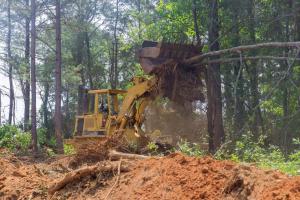
Common Traditional Land Clearing Methods
- Bulldozing for large-scale clearing
- Cut-and-remove techniques
- Controlled burning
- Excavation and grading
These traditional land clearing methods are often used when complete removal of vegetation and site preparation is required.
Forestry Mulching Benefits
Forestry mulching is widely recognized for its multiple advantages, especially for environmentally conscious landowners.
Environmental Sustainability
The mulch layer improves soil fertility, reduces erosion, and supports natural regrowth without harming the ecosystem.
Cost Efficiency
Since it combines cutting, grinding, and clearing into one process, it reduces labor, fuel, and disposal costs.
Soil Health Improvement
Mulch acts as a protective barrier, helping retain moisture and regulate soil temperature.
Faster Completion Time
Projects can be completed quickly because there’s no need for debris hauling or burning.
Reduced Site Damage
The process minimizes disruption to surrounding vegetation and preserves the land’s natural structure.
Advantages of Traditional Land Clearing Methods
While forestry mulching is gaining popularity, traditional methods still play a critical role in certain projects.
Suitable for Large Projects
Traditional clearing is ideal for commercial developments and agricultural land preparation.
Complete Vegetation Removal
It removes large trees, stumps, and roots that mulching equipment may not handle efficiently.
Better for Land Grading
If your project requires leveling or reshaping the land, traditional methods are more effective.
Effective for Dense Vegetation
Heavily wooded areas often require aggressive clearing techniques.
Forestry Mulching vs Traditional Land Clearing: Key Differences
Cost Comparison
Forestry mulching is generally more cost-effective due to fewer steps and reduced labor. Traditional methods may involve additional expenses such as hauling and disposal.
Environmental Impact
Forestry mulching has a lower environmental impact, while traditional clearing can lead to soil erosion and habitat disruption.
Efficiency and Speed
Mulching is faster for small to medium-sized properties. Traditional methods are better suited for extensive land transformation.
Post-Clearing Condition
Mulching leaves a nutrient-rich layer, whereas traditional clearing results in bare soil that may need additional treatment.
Best Land Clearing Method for Your Property
Choosing the best land clearing method for your property depends on several factors.
Property Size and Terrain
- Small to medium land: Forestry mulching is ideal
- Large or uneven terrain: Traditional clearing works better
Project Purpose
- Landscaping or conservation: Forestry mulching
- Construction or farming: Traditional clearing
Budget Constraints
Forestry mulching is typically more affordable due to fewer operational steps.
Environmental Goals
If sustainability is a priority, forestry mulching is the better option.
When Should You Choose Forestry Mulching?
Ideal Scenarios
- Light to moderate vegetation
- Soil preservation is important
- Quick and efficient clearing is required
- Eco-friendly solution is preferred
When is Traditional Land Clearing the Better Option?
Ideal Scenarios
- Large-scale construction projects
- Dense forests with large trees
- Land leveling or grading is required
- Complete vegetation removal is necessary
Why Professional Guidance Matters
Regardless of the method you choose, working with experienced professionals ensures better results and fewer complications. If you’re planning a project, especially in areas with diverse landscapes, hiring experts who provide land clearing services in Texas can help you evaluate your land and select the most effective approach.
Long-Term Impact on Land
The choice between forestry mulching and traditional clearing affects not only the initial process but also the future condition of your property.
Forestry Mulching Impact
- Improves soil quality over time
- Reduces maintenance needs
- Encourages healthy vegetation growth
Traditional Clearing Impact
- Provides a clean slate for development
- May require soil stabilization
- Can lead to erosion if not managed properly
FAQs
What is the main difference between forestry mulching and traditional land clearing?
Forestry mulching converts vegetation into mulch and leaves it on-site, while traditional clearing removes debris entirely.
Is forestry mulching more affordable?
Yes, it is often more cost-effective due to reduced labor and disposal requirements.
Which method is better for the environment?
Forestry mulching is more environmentally friendly because it minimizes soil disturbance and promotes nutrient recycling.
Can forestry mulching clear large trees?
It works best for small to medium trees. Larger trees may require traditional clearing methods.
How do I choose the best method for my property?
Evaluate your land size, project goals, budget, and environmental priorities to determine the most suitable option.
Summary
Both forestry mulching and traditional land clearing offer unique advantages depending on your property’s needs. Forestry mulching is an eco-friendly, cost-effective solution that supports soil health and minimizes disruption, while traditional methods are better suited for large-scale projects requiring complete land transformation. By understanding your project requirements and long-term goals, you can confidently choose the right approach. For reliable and customized solutions, Pierce Land Clearing provides expert services tailored to meet diverse land clearing needs efficiently and professionally.